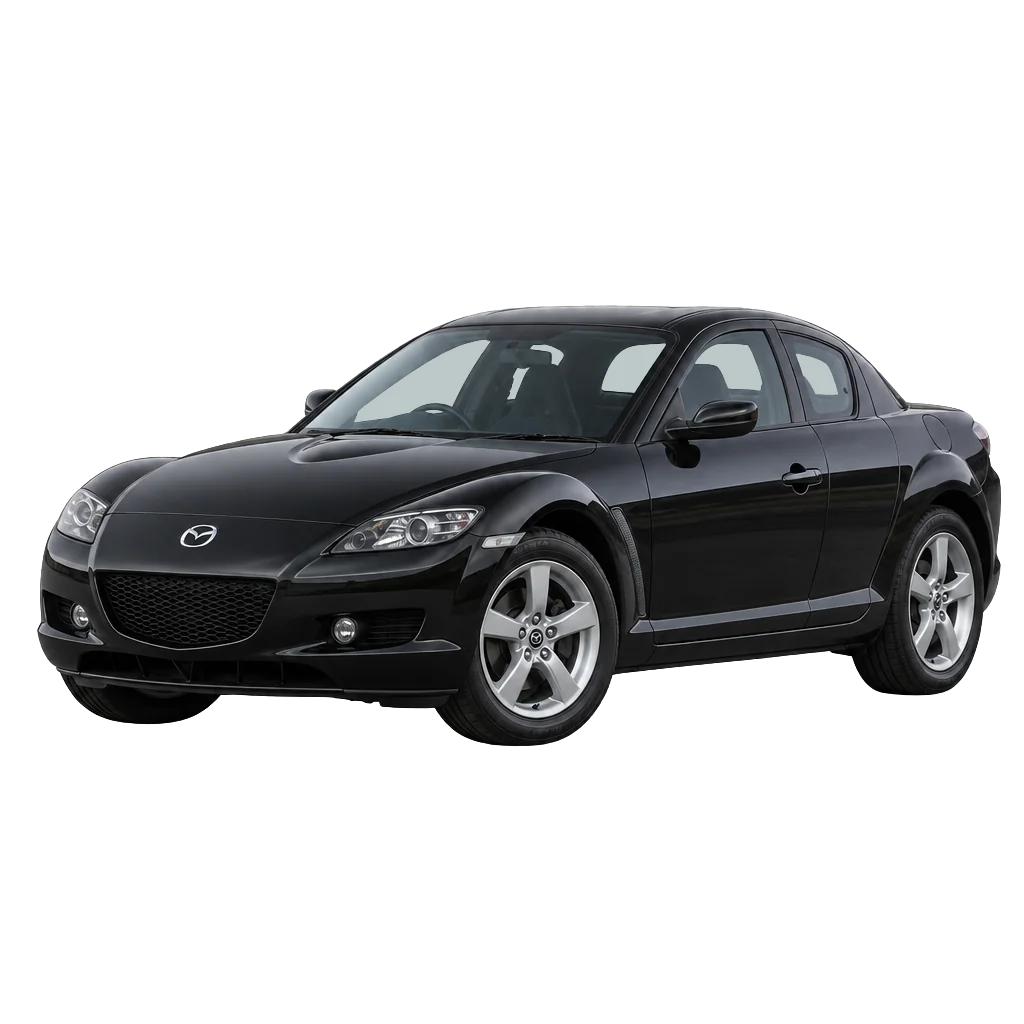
These groups combine equivalent MOT comments, such as the same tyre note on different corners. Counts are comment occurrences in the sample, not a percentage of cars.
Tyre wear
VehicleScore® MOT data includes 102 advisory comments and 8 failure comments in this group. Seen as both an advisory and a failure reason. These are comment occurrences, not a share of all cars.
These MOT comments record tyres that were worn, damaged, or close to the legal tread depth when the car was inspected.
What to inspect
Check the tread depth and look for uneven wear, cracking, or damage on all four tyres.
Example MOT wording: NEARSIDE REAR TYRE WORN CLOSE TO THE LEGAL LIMIT (4.1.E.1)
Corrosion
VehicleScore® MOT data includes 44 advisory comments in this group. Seen mainly as an advisory. These are comment occurrences, not a share of all cars.
These MOT comments record corrosion the tester could see on the body or structure. Corrosion already named on a spring, brake, or other component is counted with that component.
What to inspect
Inspect the underside, sills, and subframe for heavy corrosion, especially where an advisory mentions it.
Example MOT wording: REAR SUB-FRAME CORRODED BUT NOT SERIOUSLY WEAKENED (5.3.3 (B) (I))
Brake disc wear
VehicleScore® MOT data includes 27 advisory comments in this group. Seen mainly as an advisory. These are comment occurrences, not a share of all cars.
These MOT comments record brake discs that were worn, scored, pitted, or corroded.
What to inspect
Look at the disc faces for deep scoring, a lip at the edge, and corrosion.
Example MOT wording: FRONT BRAKE DISC WORN, PITTED OR SCORED, BUT NOT SERIOUSLY WEAKENED (1.1.14 (A) (II))
Emissions test issues
VehicleScore® MOT data includes 18 failure comments in this group. Seen mainly as a failure reason. These are comment occurrences, not a share of all cars.
These MOT comments record an exhaust emissions result. They are counted separately from a warning lamp or a catalytic converter note.
What to inspect
Ask for the emissions printout and whether any repair followed a failed test.
Example MOT wording: EXHAUST EMISSIONS CARBON MONOXIDE CONTENT AFTER 2ND FAST IDLE EXCESSIVE (7.3.D.3)
Brake pad wear
VehicleScore® MOT data includes 8 advisory comments and 4 failure comments in this group. Seen as both an advisory and a failure reason. These are comment occurrences, not a share of all cars.
These MOT comments record brake pads that were worn or below the inspection limit.
What to inspect
Ask for recent pad replacement and look at the remaining pad thickness.
Example MOT wording: FRONT BRAKE PAD(S) WEARING THIN (1.1.13 (A) (II))
Anti-roll bar issues
VehicleScore® MOT data includes 9 failure comments in this group. Seen mainly as a failure reason. These are comment occurrences, not a share of all cars.
These MOT comments record wear or damage in the anti-roll bar, its links, or its bushes.
What to inspect
Listen for a knock when driving over uneven ground at low speed.
Example MOT wording: OFFSIDE FRONT ANTI-ROLL BAR LINKAGE INSECURE (2.4.G.1)
Lambda sensor issues
VehicleScore® MOT data includes 7 failure comments in this group. Seen mainly as a failure reason. These are comment occurrences, not a share of all cars.
These MOT comments record a lambda sensor reading or defect noted at the test.
What to inspect
Ask whether a sensor or emissions fault has been diagnosed since the test.
Example MOT wording: EXHAUST EMISSIONS LAMBDA READING AFTER 2ND FAST IDLE OUTSIDE SPECIFIED LIMITS (7.3.D.3)
Coil spring issues
VehicleScore® MOT data includes 4 failure comments in this group. Seen mainly as a failure reason. These are comment occurrences, not a share of all cars.
These MOT comments record coil springs that were corroded, fractured, or otherwise defective. They are counted separately from shock absorbers.
What to inspect
Look for a broken or heavily corroded spring and compare the ride height on both sides.
Example MOT wording: OFFSIDE REAR COIL SPRING FRACTURED OR BROKEN (5.3.1 (B) (I))