← View More SEAT Models

SEAT ALHAMBRA Common Problems & Reliability

Based on 1,181 MOT tests from 85 vehicles analysed by VehicleScore®. The figures below describe that VehicleScore® sample. Recurring issues seen in VehicleScore® MOT data are not a claim that every SEAT ALHAMBRA has the same fault.

SEAT ALHAMBRA's have a slightly over average reliability rating of 507/999. The score was calculated from the average of every SEAT ALHAMBRA that has had a registered MOT.

We calculated all of the below figures by getting the score from each vehicle make/model/year/fuel, which are each calculated a score. We then generate the average score, taking into account factors such as mileage and emissions.

Also check BHP & performance, road tax, fuel economy, and CO2 emissions for the SEAT ALHAMBRA.

SEAT logo
SEAT logo
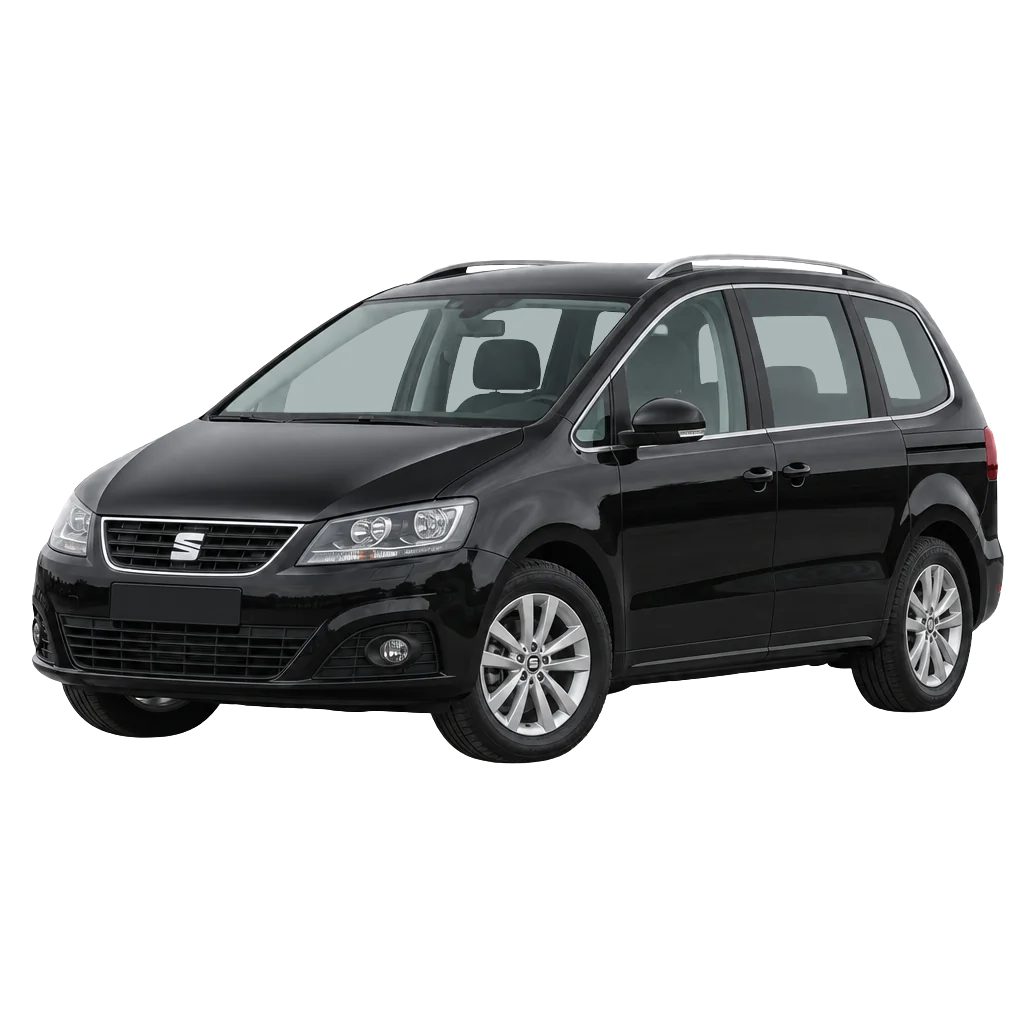
SEAT ALHAMBRA side viewSEAT ALHAMBRA (example)
SEAT logo

Check the reliability of your SEAT Alhambra

Enter your registration to see the MOT history for this car.

SEAT Alhambra side view
  • Service history

    Dealer & service records

  • MOT records

    Past & current MOT data

  • Write-off check

    Check for insurance write-offs

  • Finance check

    Outstanding finance & theft checks

Fuel TypeYearReliability ScoreAvg MileageSample Size
Diesel2019734/999Very good82,496 miles550 vehicles
Diesel2017622/999Good76,327 miles2,871 vehicles
Diesel2014571/999Above average80,048 miles2,037 vehicles
Diesel2011501/999Above average90,072 miles1,047 vehicles
Diesel2010489/999Average94,628 miles650 vehicles
Diesel2003377/999Fair94,407 miles997 vehicles
Diesel2002380/999Fair95,525 miles1,153 vehicles
Diesel2001383/999Fair94,745 miles1,197 vehicles

How reliable is the SEAT ALHAMBRA?

Based on 1,181 MOT tests from 85 vehicles analysed by VehicleScore®.

Vehicles

85

MOT tests

1,181

Pass rate

78.2%

Median mileage

127,008 mi

Recurring issues seen in VehicleScore® MOT data are inspection findings from this sample. They are not a statement that every SEAT ALHAMBRA has the same fault. The median VehicleScore® in this sample is 598 out of 999.

Common SEAT ALHAMBRA MOT problems

These groups combine equivalent MOT comments, such as the same tyre note on different corners. Counts are comment occurrences in the sample, not a percentage of cars.

Tyre wear

VehicleScore® MOT data includes 217 advisory comments and 35 failure comments in this group. Seen as both an advisory and a failure reason. These are comment occurrences, not a share of all cars.

These MOT comments record tyres that were worn, damaged, or close to the legal tread depth when the car was inspected.

What to inspect

Check the tread depth and look for uneven wear, cracking, or damage on all four tyres.

Example MOT wording: OFFSIDE FRONT TYRE WORN CLOSE TO LEGAL LIMIT/WORN ON EDGE (5.2.3 (E))

Suspension arm issues

VehicleScore® MOT data includes 76 advisory comments and 5 failure comments in this group. Seen as both an advisory and a failure reason. These are comment occurrences, not a share of all cars.

These MOT comments record a worn, corroded, or damaged suspension arm or its pin.

What to inspect

Look for play or corrosion at the arm and ask whether it has been replaced.

Example MOT wording: NEARSIDE REAR SUSPENSION ARM CORRODED BUT NOT SERIOUSLY WEAKENED (5.3.3 (B) (I))

Brake pad wear

VehicleScore® MOT data includes 40 advisory comments and 6 failure comments in this group. Seen as both an advisory and a failure reason. These are comment occurrences, not a share of all cars.

These MOT comments record brake pads that were worn or below the inspection limit.

What to inspect

Ask for recent pad replacement and look at the remaining pad thickness.

Example MOT wording: REAR BRAKE PAD(S) WEARING THIN (1.1.13 (A) (II))

Brake disc wear

VehicleScore® MOT data includes 44 advisory comments in this group. Seen mainly as an advisory. These are comment occurrences, not a share of all cars.

These MOT comments record brake discs that were worn, scored, pitted, or corroded.

What to inspect

Look at the disc faces for deep scoring, a lip at the edge, and corrosion.

Example MOT wording: FRONT BRAKE DISC WORN, PITTED OR SCORED, BUT NOT SERIOUSLY WEAKENED (1.1.14 (A) (II))

Oil leak

VehicleScore® MOT data includes 28 advisory comments in this group. Seen mainly as an advisory. These are comment occurrences, not a share of all cars.

These MOT comments record an oil leak noted by the tester. Shock absorber misting is counted as a damper issue, not as an engine oil leak.

What to inspect

Look under the engine for fresh oil, and check the oil level.

Example MOT wording: OIL LEAK, BUT NOT EXCESSIVE (8.4.1 (A) (I))

Corrosion

VehicleScore® MOT data includes 20 advisory comments in this group. Seen mainly as an advisory. These are comment occurrences, not a share of all cars.

These MOT comments record corrosion the tester could see on the body or structure. Corrosion already named on a spring, brake, or other component is counted with that component.

What to inspect

Inspect the underside, sills, and subframe for heavy corrosion, especially where an advisory mentions it.

Example MOT wording: REAR SUB-FRAME CORRODED BUT NOT SERIOUSLY WEAKENED (5.3.3 (B) (I))

Lamp and bulb faults

VehicleScore® MOT data includes 15 failure comments in this group. Seen mainly as a failure reason. These are comment occurrences, not a share of all cars.

These MOT comments record a lamp or bulb other than a headlamp or indicator.

What to inspect

Switch on the side, brake, fog, and number-plate lamps.

Example MOT wording: ANTI-LOCK BRAKING SYSTEM WARNING LAMP INDICATES AN ABS FAULT (1.6 (B))

Engine warning lamp

VehicleScore® MOT data includes 11 failure comments in this group. Seen mainly as a failure reason. These are comment occurrences, not a share of all cars.

These MOT comments record an engine warning lamp that was on, or did not work, during the inspection.

What to inspect

Switch on the ignition and confirm the lamp comes on and then goes out. Ask what was diagnosed if it stayed on.

Example MOT wording: ENGINE MIL INOPERATIVE OR INDICATES A MALFUNCTION (8.2.2.2 (G))

SEAT ALHAMBRA MOT reliability by year

A model year is only commented on when VehicleScore® has at least 5 vehicles from that year.

YearVehiclesMOT testsPass rateRecurring issues seen
201963688.9%Tyre wear, Registration plate condition
20171415889.2%Tyre wear, Brake pad wear
20161519182.2%Tyre wear, Suspension arm issues
201556770.1%Suspension arm issues, Tyre wear
201456786.6%Tyre wear, Brake disc wear
201368177.8%Tyre wear, Suspension arm issues
20121117777.4%Suspension arm issues, Tyre wear

What to check when buying a used SEAT ALHAMBRA

This is an inspection checklist based on MOT comments in the VehicleScore® sample. It does not mean the car you are looking at has these defects.

  • Tyre wear. Check the tread depth and look for uneven wear, cracking, or damage on all four tyres.

  • Suspension arm issues. Look for play or corrosion at the arm and ask whether it has been replaced.

  • Brake pad wear. Ask for recent pad replacement and look at the remaining pad thickness.

  • Brake disc wear. Look at the disc faces for deep scoring, a lip at the edge, and corrosion.

  • Oil leak. Look under the engine for fresh oil, and check the oil level.

  • Corrosion. Inspect the underside, sills, and subframe for heavy corrosion, especially where an advisory mentions it.

  • Lamp and bulb faults. Switch on the side, brake, fog, and number-plate lamps.

  • Engine warning lamp. Switch on the ignition and confirm the lamp comes on and then goes out. Ask what was diagnosed if it stayed on.

Buying a SEAT ALHAMBRA?

Common problems tell you what can affect SEAT ALHAMBRAs generally. VehicleScore® can check the history of the actual car you're considering.

Where does this data come from?

VehicleScore® analyses MOT histories from vehicles in its own dataset. Sample sizes vary by model, and a small sample is labelled as such. MOT data records roadworthiness and inspection defects. It does not capture every mechanical or electronic problem a car can have, and a comment on one test is not proof that the model has an inherent fault.

Browse Other SEAT Models