Cat S Check
What is a Cat S Car?
A Category S (Cat S) car is a vehicle that has been written off by an insurance company after suffering structural damage. Although the damage affected the vehicle's structural components, it may still be repaired, returned to a roadworthy condition and legally driven on UK roads.
A Cat S classification does not automatically mean a vehicle is unsafe. Instead, it indicates that the insurer decided the cost of repairing the vehicle was greater than its value, making it uneconomical to repair through an insurance claim.
Because structural components have been damaged, buyers should take extra care to understand the quality of repairs before purchasing a Category S vehicle.
What does Category S mean?
Category S replaced the old Category C insurance write-off classification in 2017.
A Category S vehicle has previously suffered damage to structural parts of the vehicle, which may include:
- Chassis
- Structural frame
- Crumple zones
- Suspension mounting points
- Other structural components
Although these vehicles can often be repaired safely, the quality of repairs is particularly important.
Can you buy a Cat S vehicle?
Yes. Many Category S vehicles are professionally repaired and sold back onto the used car market.
Before buying, it's important to review:
- The vehicle's Category S history
- MOT history
- Mileage records
- Outstanding finance
- The quality of repairs
- An independent inspection if appropriate
A full VehicleScore check helps you understand the vehicle's history before making a purchase.
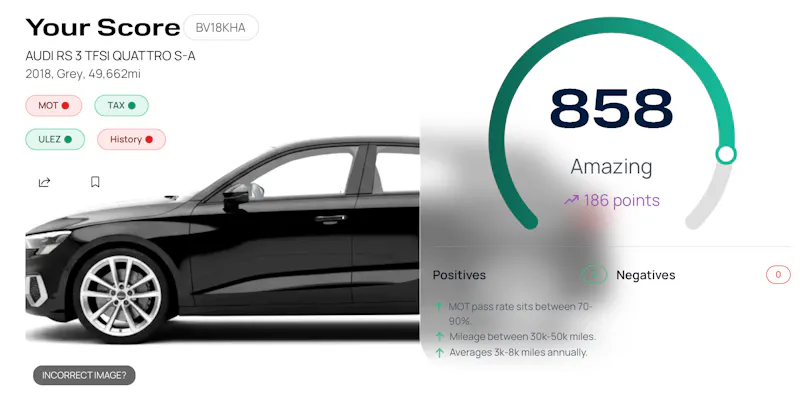
How to Check if a Car is a Category S Write-Off
If you're buying a used vehicle, carrying out a Category S check is one of the best ways to understand its history before making a purchase. A vehicle may appear to be in excellent condition, but if it has previously suffered structural damage, it's important to understand exactly what happened before committing to buy.
With VehicleScore, checking a vehicle's history takes just a few moments.
Enter the Vehicle Registration
Simply enter the vehicle's registration number into the VehicleScore search tool to generate a comprehensive vehicle history report.
Our report combines information from multiple trusted data sources, helping you understand the vehicle's history before you view or purchase it.
Review the Vehicle History Report
Your VehicleScore report provides far more than a simple Category S result. Alongside insurance write-off information, you'll also be able to review:
- Category S insurance write-off records
- Category N insurance write-off records
- MOT history and advisory notices
- Mileage history
- Outstanding finance
- Road tax status
- Vehicle specifications
- VehicleScore rating and AI-powered insights
Viewing all of this information together gives you a much clearer understanding of the vehicle's condition and previous ownership history.
Make an Informed Buying Decision
A Category S vehicle shouldn't automatically be dismissed. Many have been professionally repaired and continue to provide years of reliable service. However, because Category S vehicles have previously suffered structural damage, it's particularly important to review the vehicle's history carefully and inspect the quality of any repairs before buying.
Checking the vehicle's write-off history alongside MOT records, mileage history and finance information helps you make a more informed decision and buy with confidence.
Should You Buy a Cat S Car?
Buying a Category S (Cat S) vehicle can be a good way to save money, but it's important to understand what the Category S classification means before making a purchase.
Unlike a Category N vehicle, a Cat S vehicle has previously suffered structural damage. While many are repaired to a high standard and safely returned to the road, the quality of those repairs plays a significant role in the vehicle's long-term reliability, safety and resale value.
A Category S classification doesn't automatically mean you should avoid a vehicle. Instead, it means you should carry out more thorough checks before deciding whether it's the right car for you.
Advantages of Buying a Cat S Vehicle
A Category S vehicle can offer several advantages, including:
- A significantly lower purchase price than an equivalent vehicle with no write-off history.
- Excellent value when repairs have been completed to a professional standard.
- Many vehicles return to the road and provide years of reliable ownership.
- Ideal for buyers looking to maximise value while understanding the vehicle's history.
For informed buyers, a Category S vehicle can represent an opportunity to purchase a higher-specification vehicle for less money.
Things to Consider Before Buying
Because a Category S vehicle has previously suffered structural damage, it's worth carrying out additional checks before buying.
Consider reviewing:
- The reason the vehicle was classified as Category S.
- The quality of any structural repairs.
- The vehicle's MOT history and advisory notices.
- Mileage records to ensure they remain consistent.
- Any outstanding finance.
- An independent mechanical inspection where appropriate.
Understanding the vehicle's history helps reduce the risk of unexpected repair costs in the future.
A Category S vehicle isn't automatically a poor purchase, but it does require more careful consideration than a vehicle with no write-off history.
If repairs have been completed professionally and the vehicle's history checks out, a Category S vehicle can provide excellent value for money. However, because structural damage has occurred in the past, it's important to review insurance write-off records, MOT history, mileage and finance information before making a final decision.
A comprehensive VehicleScore check brings all of this information together, helping you buy with greater confidence.
Cat S vs Cat N: What's the Difference?
Category S and Category N vehicles are both insurance write-offs, but the type of damage they have sustained is very different. Understanding this distinction can help you decide whether a vehicle is right for you.
The key difference is that Category S vehicles have suffered structural damage, whereas Category N vehicles have not. Although both categories can legally return to the road after suitable repairs, buyers should take extra care when assessing the repair quality of a Category S vehicle.
Feature | Cat S | Cat N |
|---|---|---|
Non-structural damage | May also be present | Yes |
Chassis or frame affected | Yes | No |
Can return to the road after repair | Yes | Yes |
Typical repairs | Structural repairs, chassis, frame | Panels, bumpers, lights, suspension, electrical |
Usually lower purchase price | Yes | Yes |
Repair quality especially important | Yes | Yes |
Full vehicle history check recommended | Yes | Yes |
Which Category is Better?
Neither Category S nor Category N is automatically better than the other. The right choice depends on the individual vehicle, the quality of repairs and your budget.
For many buyers, a Category N vehicle may feel like the lower-risk option because it has not previously suffered structural damage. However, a well-repaired Category S vehicle can also offer excellent value and provide years of reliable ownership.
The most important step is to understand the vehicle's complete history before buying. Reviewing insurance write-off records alongside MOT history, mileage records and finance information helps you make a more informed purchasing decision.
What Does Our Cat S Check Include?
A Category S record is only one part of a vehicle's history. Before buying any used car, it's important to understand its complete background so you can identify potential risks and make an informed decision.
VehicleScore combines multiple trusted data sources into a single, easy-to-read report, helping you understand much more than whether a vehicle has previously been recorded as a Category S insurance write-off.
Insurance Write-Off History
Quickly find out whether a vehicle has ever been recorded as an insurance write-off, including:
- Category S
- Category N
- Other insurance write-off categories where available
Understanding a vehicle's write-off history gives you greater confidence when assessing its value and previous damage.
MOT History and Advisories
Review the vehicle's complete MOT history, including:
- Previous passes and failures
- Advisory notices
- Recorded mileage
- Reasons for failure
Recurring MOT advisories can help identify ongoing issues that may require attention in the future.
Outstanding Finance
Before purchasing any used vehicle, it's essential to check whether finance is still outstanding.
Buying a vehicle with outstanding finance could create unnecessary complications, making this one of the most valuable checks to complete before committing to a purchase.
Mileage History
Review historical mileage records to check that the vehicle's mileage appears consistent throughout its lifetime.
Comparing mileage records with MOT history can help identify potential discrepancies before you buy.
Vehicle Specifications
Confirm important vehicle information, including:
- Make and model
- Engine size
- Fuel type
- Transmission
- Colour
- Registration details
Matching the vehicle you're viewing against its official records helps ensure everything is exactly as expected.
VehicleScore Rating
VehicleScore brings all of this information together into a simple overall rating, helping you understand a vehicle's history at a glance.
Instead of reviewing multiple reports individually, you'll receive a clear summary designed to help you buy with confidence.
Frequently Asked Questions
What is a Cat S car?
A Cat S (Category S) car is a vehicle that has been written off by an insurance company after suffering structural damage. Although the vehicle was considered uneconomical to repair by the insurer, it can be professionally repaired, returned to a roadworthy condition and legally driven on UK roads.
Is Cat S the same as Category C?
No. Category S replaced the old Category C classification in 2017. Both categories relate to vehicles that have suffered structural damage, but Category S forms part of the current insurance write-off classification system.
Is a Cat S car safe to drive?
A Category S vehicle can be safe to drive if it has been repaired correctly and meets all legal roadworthiness requirements. The quality of repairs is particularly important, so buyers should inspect the vehicle carefully and review its history before purchasing.
Can a Cat S car pass an MOT?
Yes. A Category S vehicle can pass an MOT provided it meets all legal safety and roadworthiness standards. Its insurance write-off classification does not prevent it from being tested or driven legally.
Does Cat S reduce a car's value?
Yes. A Category S vehicle is typically worth less than an equivalent vehicle without a write-off history. The reduction in value depends on factors such as the quality of repairs, vehicle age, desirability and overall condition.
Can you insure a Cat S car?
Yes. Most insurers will provide cover for Category S vehicles, although some may charge higher premiums or request additional information about previous repairs.
Can I finance a Cat S vehicle?
Some finance providers will lend against Category S vehicles, while others may have restrictions. Approval depends on the lender's policies, the vehicle's value and your individual circumstances.
Can a dealer sell a Cat S vehicle?
Yes. Dealers can legally sell Category S vehicles, provided the vehicle's history is disclosed where required. Buyers should always carry out an independent vehicle history check before purchasing.
Can Cat S status be removed?
No. Once a vehicle has been recorded as Category S, the write-off record becomes a permanent part of its history and cannot be removed after repairs have been completed.
How do I check if a vehicle is Cat S?
The easiest way is to carry out a vehicle history check using the vehicle's registration number. A comprehensive report will confirm whether the vehicle has previously been recorded as a Category S insurance write-off, alongside MOT history, mileage records and finance information.
What is the difference between Cat S and Cat N?
The key difference is structural damage. Category S vehicles have previously suffered structural damage, while Category N vehicles have only sustained non-structural damage. Both categories can legally return to the road after suitable repairs.
Should I buy a Cat S vehicle?
A Category S vehicle can offer excellent value if it has been repaired to a high standard and is priced appropriately. Before buying, review its complete history, inspect the repairs carefully and consider arranging an independent inspection if you have any concerns.
Does Cat S affect road tax?
No. A Category S classification has no direct effect on Vehicle Excise Duty (road tax). Road tax is calculated based on factors such as the vehicle's age, emissions and fuel type.
Does Cat S affect resale value?
Yes. Most Category S vehicles sell for less than similar vehicles without a write-off history. Buyers generally expect a discount because the structural damage record remains with the vehicle permanently.
Why should I carry out a Cat S check before buying a used car?
A Cat S check helps you understand whether a vehicle has previously suffered structural damage and been declared an insurance write-off. Combined with MOT history, mileage records, finance checks and other vehicle information, it gives you a much clearer picture of the vehicle's past and helps you make a more informed buying decision.