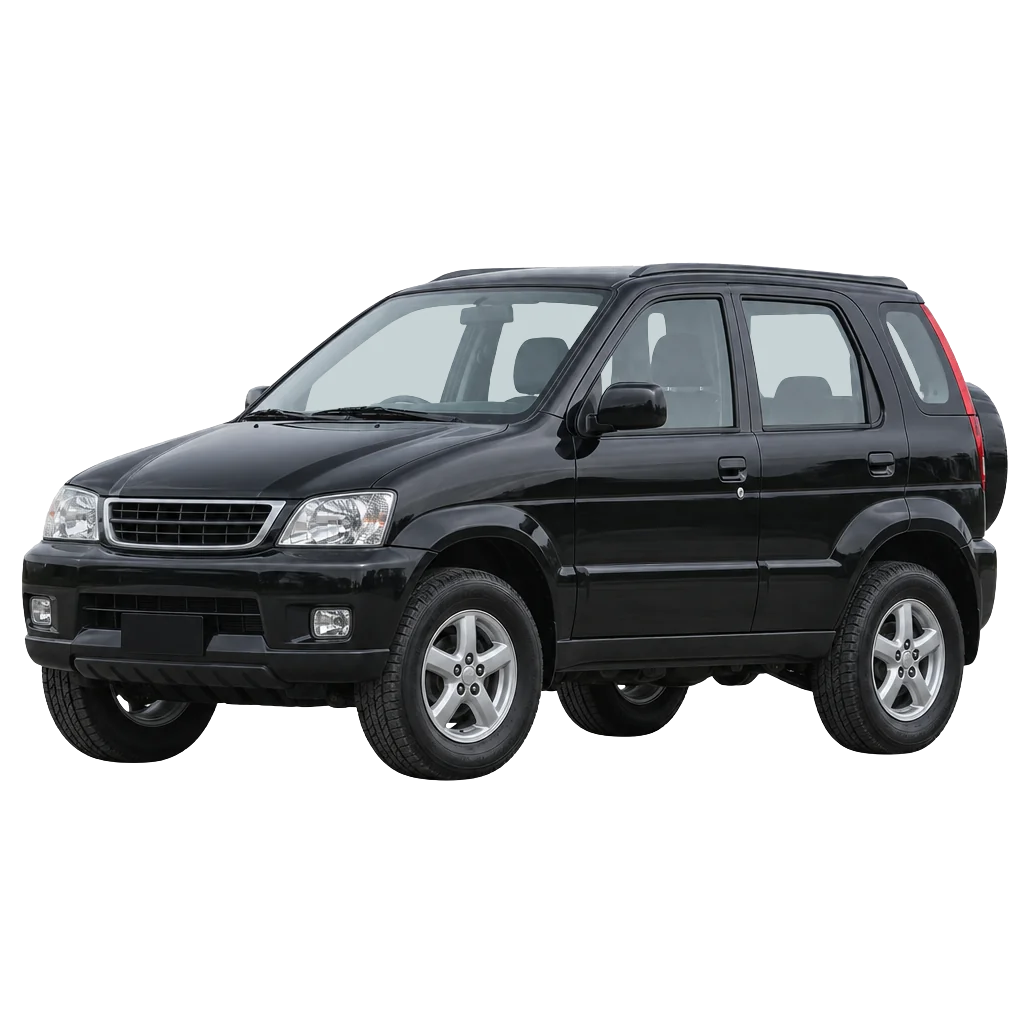
These groups combine equivalent MOT comments, such as the same tyre note on different corners. Counts are comment occurrences in the sample, not a percentage of cars.
Tyre wear
VehicleScore® MOT data includes 69 advisory comments in this group. Seen mainly as an advisory. These are comment occurrences, not a share of all cars.
These MOT comments record tyres that were worn, damaged, or close to the legal tread depth when the car was inspected.
What to inspect
Check the tread depth and look for uneven wear, cracking, or damage on all four tyres.
Example MOT wording: OFFSIDE REAR TYRE SLIGHTLY DAMAGED/CRACKING OR PERISHING (5.2.3 (D) (II))
Brake pad wear
VehicleScore® MOT data includes 33 advisory comments and 9 failure comments in this group. Seen as both an advisory and a failure reason. These are comment occurrences, not a share of all cars.
These MOT comments record brake pads that were worn or below the inspection limit.
What to inspect
Ask for recent pad replacement and look at the remaining pad thickness.
Example MOT wording: FRONT BRAKE PAD(S) WEARING THIN (3.5.1G)
Exhaust
VehicleScore® MOT data includes 18 advisory comments and 12 failure comments in this group. Seen as both an advisory and a failure reason. These are comment occurrences, not a share of all cars.
These MOT comments record exhaust leaks, insecurity, or other exhaust defects found at inspection.
What to inspect
Listen for blowing from the exhaust and look for corrosion or loose mounts.
Example MOT wording: REAR EXHAUST MOUNTING DEFECTIVE (6.1.2 (A))
Anti-roll bar issues
VehicleScore® MOT data includes 26 advisory comments in this group. Seen mainly as an advisory. These are comment occurrences, not a share of all cars.
These MOT comments record wear or damage in the anti-roll bar, its links, or its bushes.
What to inspect
Listen for a knock when driving over uneven ground at low speed.
Example MOT wording: NEARSIDE FRONT ANTI-ROLL BAR LINKAGE PIN OR BUSH WORN BUT NOT RESULTING IN EXCESSIVE MOVEMENT (5.3.4 (A) (I))
Coil spring issues
VehicleScore® MOT data includes 7 advisory comments in this group. Seen mainly as an advisory. These are comment occurrences, not a share of all cars.
These MOT comments record coil springs that were corroded, fractured, or otherwise defective. They are counted separately from shock absorbers.
What to inspect
Look for a broken or heavily corroded spring and compare the ride height on both sides.
Example MOT wording: OFFSIDE FRONT COIL SPRING CORRODED (5.3.1 (B) (I))
Suspension arm issues
VehicleScore® MOT data includes 7 advisory comments in this group. Seen mainly as an advisory. These are comment occurrences, not a share of all cars.
These MOT comments record a worn, corroded, or damaged suspension arm or its pin.
What to inspect
Look for play or corrosion at the arm and ask whether it has been replaced.
Example MOT wording: OFFSIDE FRONT SUSPENSION ARM PIN OR BUSH WORN BUT NOT RESULTING IN EXCESSIVE MOVEMENT (5.3.4 (A) (I))
Corrosion
VehicleScore® MOT data includes 5 failure comments in this group. Seen mainly as a failure reason. These are comment occurrences, not a share of all cars.
These MOT comments record corrosion the tester could see on the body or structure. Corrosion already named on a spring, brake, or other component is counted with that component.
What to inspect
Inspect the underside, sills, and subframe for heavy corrosion, especially where an advisory mentions it.
Example MOT wording: OFFSIDE REAR SUSPENSION COMPONENT MOUNTING PRESCRIBED AREA EXCESSIVELY CORRODED SIGNIFICANTLY REDUCING STRUCTURAL STRENGTH (5.3.6 (A) (I))
Ball joint wear
VehicleScore® MOT data includes 3 failure comments in this group. Seen mainly as a failure reason. These are comment occurrences, not a share of all cars.
These MOT comments record a worn or damaged ball joint. Track rod ends are counted with steering, not here.
What to inspect
Ask for the joint to be checked for play with the suspension loaded and unloaded.
Example MOT wording: NEARSIDE FRONT LOWER SUSPENSION ARM BALL JOINT EXCESSIVELY WORN (5.3.4 (A) (I))